
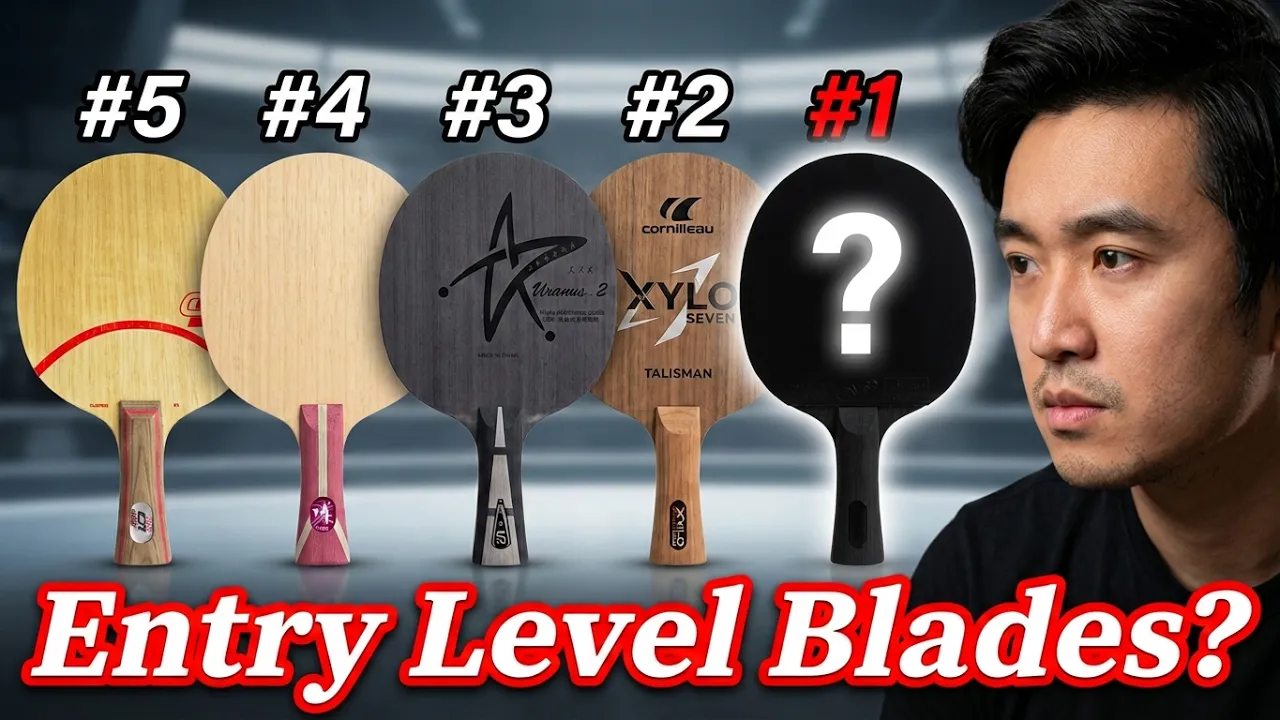
Choosing your first serious table tennis blade can be overwhelming. There are dozens of options in the entry-level price range, and not all of them are worth your money. In this guide, we rank ten entry-level blades that deliver incredible value — based on real playing experience, not marketing hype.
The goal is simple: buy the right one, not the expensive one. Whether you are an absolute beginner or an intermediate player looking for a affordable upgrade, this ranking will help you find a blade that fits your game.
Key Takeaway
There is no single “best value” blade for everyone. Every blade has strengths and weaknesses. The right choice depends on your skill level, playing style, and personal preference. This ranking focuses on blades that offer excellent performance relative to their price — with a clear explanation of who each blade suits best.
The 10 Best Entry-Level Table Tennis Blades
This list covers blades that have been reviewed and played with over the years. Some popular models did not make the cut — not because they are bad, but simply because they have not been tested. The focus is on blades that are well-known, widely available, and offer strong value for money.
Number 10: Stiga Clipper Wood

The Stiga Clipper Wood is a true classic. Its reputation and legacy in table tennis are top-tier. This is a 7-ply all-wood blade, which means two extra layers compared to a standard 5-ply blade. The result is better attacking quality than a 5-ply all-wood blade, with solid attacking power while staying stable.
This blade is best suited for players who have moved past the absolute beginner stage and have some basic foundation. It works great for both matches and practice. The quality control is excellent, and the blade has been around for almost 20 years — a true classic. The value for money is outstanding.
Best for: Players with some foundation who want a reliable, stable 7-ply all-wood blade for matches and practice.
Number 9: Joola Xylo 7
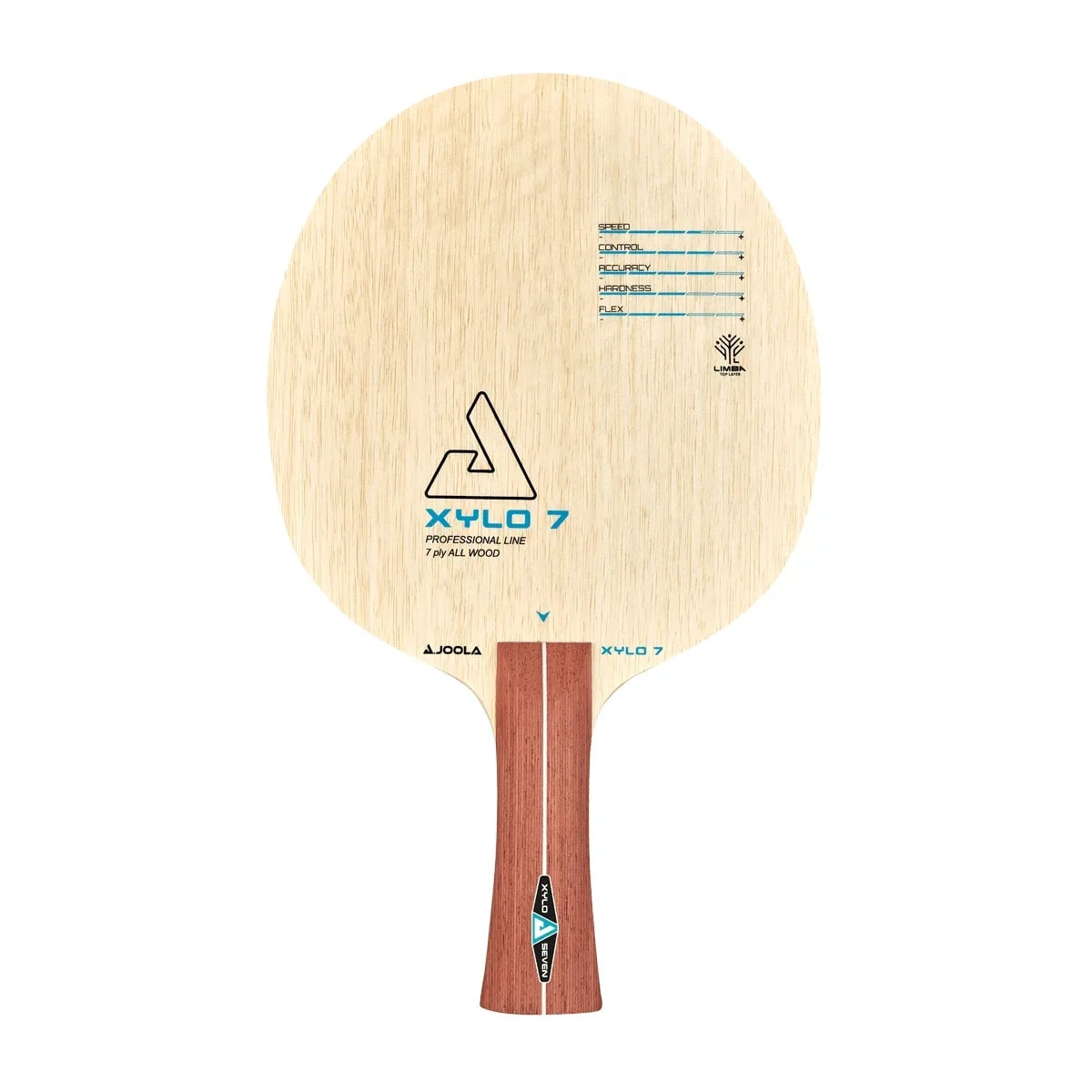
The Joola X7 has the same structure as the Clipper Wood — it is essentially a copy of that design. Because the Clipper Wood set the standard, many brands copied its construction. The advantage of the X7 is that it is cheaper, typically around $10-$15 less than the Clipper Wood, with a market price of around $50.
Based on review, the X7’s offensive performance is slightly better than the Clipper Wood. It can satisfy more advanced recreational players for both practice and matches. The build quality is also very good — arguably a tiny bit better than the Clipper Wood’s. Whether you want to train or attack, it gives you a solid experience as an entry-level blade.
Best for: Players who want Clipper Wood-like performance at a lower price, with slightly better offensive performance.
If you prefer a bigger brand name, go with the Clipper Wood. If brand doesn’t matter as much, go with the X7. Both offer excellent value.
Number 8: DHS Fang Bo B2X

The DHS Fang Bo B2X stands out for its ball-holding feel and offensive ability. It is also not hard to activate. Many players who struggle to activate the DHS Long 5X find that the B2X works much better for them. While it may not match the Long 5X’s overall quality, its thicker core and surface layers make it more approachable.
If you pick an entry-level blade, you will find it much easier to control. Once you switch to the B2X, you will notice it feels lighter and more nimble than the Long 5X. Overall, the B2X is not that hard to handle — it is easy to activate and attack with, and the ball-holding is there.
If you are looking for an inner-fiber blade with good dwell time to practice looping with spin, the B2X is an excellent choice. However, it is not a fast blade, so it is still more about stability and control. It is easy to adapt to.
Downside: The craftsmanship is a bit rough. In one instance, splinters on the edge of the Fang Bo B2X actually poked a player’s hand. The build quality is not great — that is the main issue.
Best for: Players looking for an inner-fiber blade with good dwell time for looping with spin, who prioritize control and stability over outright speed.
Number 7 & 6: Sanwei Fextra VII and Yinhe U2


Between the Sanwei Fextra VII and the Yinhe U2, the Fextra VII’s build quality and look are preferable. Sanwei focuses more on offense, so their blades feel crisper. The Fextra VII versus the U2 follows the same pattern.
With the Fextra VII, you get a stronger crisp feeling on attacks, while the U2 has a softer, more mellow feel and better ball-holding than the Fextra VII. If you want to attack and need some speed, the Fextra VII is better. That is the key difference between the two.
Both are entry-level all-wood blades, perfect for absolute beginners who do not know which racket to buy. You cannot go wrong with either. If you lean toward speed, pick the Fextra VII. If you prefer a softer feel, go with the U2. Of course, if you are at a higher level, these might not give you enough performance.
Best for: Absolute beginners who want a reliable all-wood blade. Choose Fextra VII for speed, U2 for softer feel and better ball-holding.
Number 5: Cornilleau Talisman

The Cornilleau Talisman is made by the French company Cornilleau. It is a 5-ply all-wood blade. Its biggest feature is how light it is — very fast transitions. The heaviest one is only 85 grams, and the lightest is just 77 grams. The handle is not thick either, pretty slim. So when you play, transitions feel light and effortless.
At the same time, the ball-holding feel is excellent. If you pair it with tension rubber, its attacking performance is still impressive among 5-ply all-wood blades. It also gives you good grip feedback. This is a 5-ply all-wood blade with outstanding value.
This blade has been recommended to kids and female players, and the feedback was all positive. Because kids have smaller hands and women do too, a 7-ply all-wood blade might feel a bit uncomfortable — like grabbing a ZLC or an X7, which can feel a bit thick. That won’t be an issue here. The handle is slightly slimmer in comparison, which works for a wider range of players.
Best for: Kids, female players, and anyone who prefers a light, slim-handled 5-ply all-wood blade with excellent ball-holding and fast transitions.
Number 4 & 3: Sanwei 75 and Yinhe Pro 01


The Sanwei 75 and Yinhe Pro 01 are top-tier representatives in the entry-level price range. They are basically the flagship entry-level products from Yinhe and Sanwei. The Pro 01, in particular, has excellent quality control.
Both are 5+2, 7-layer ALC composite blades. The Pro 01 plays very similarly to the Butterfly Viscaria. Performance-wise, they reflect Sanwei and Yinhe’s different design philosophies. Yinhe’s blade excels in ball-holding and control. Once you activate it, it gives you both support and speed. The Sanwei 75 leans more toward attack and speed.
You can clearly feel the 75 has sharper offensive power and more pace, while the Pro 01 feels more stable with better ball-holding. The Pro 01 is better suited for players with some foundation who want to focus on playing controlled spin loops. The Sanwei 75 is better for players with some foundation who prioritize attack and speed.
These two are more for intermediate players. If you are using the Clipper Wood or X7 and feel they are not enough anymore, these are great upgrade options. They are both around $45. The Pro 01 is slightly pricier, the 75 is a bit cheaper.
Best for: Intermediate players who want to upgrade from all-wood blades. Choose the 75 for attack and speed, the Pro 01 for steady spin loops and control.
Number 2: DHS Power-S
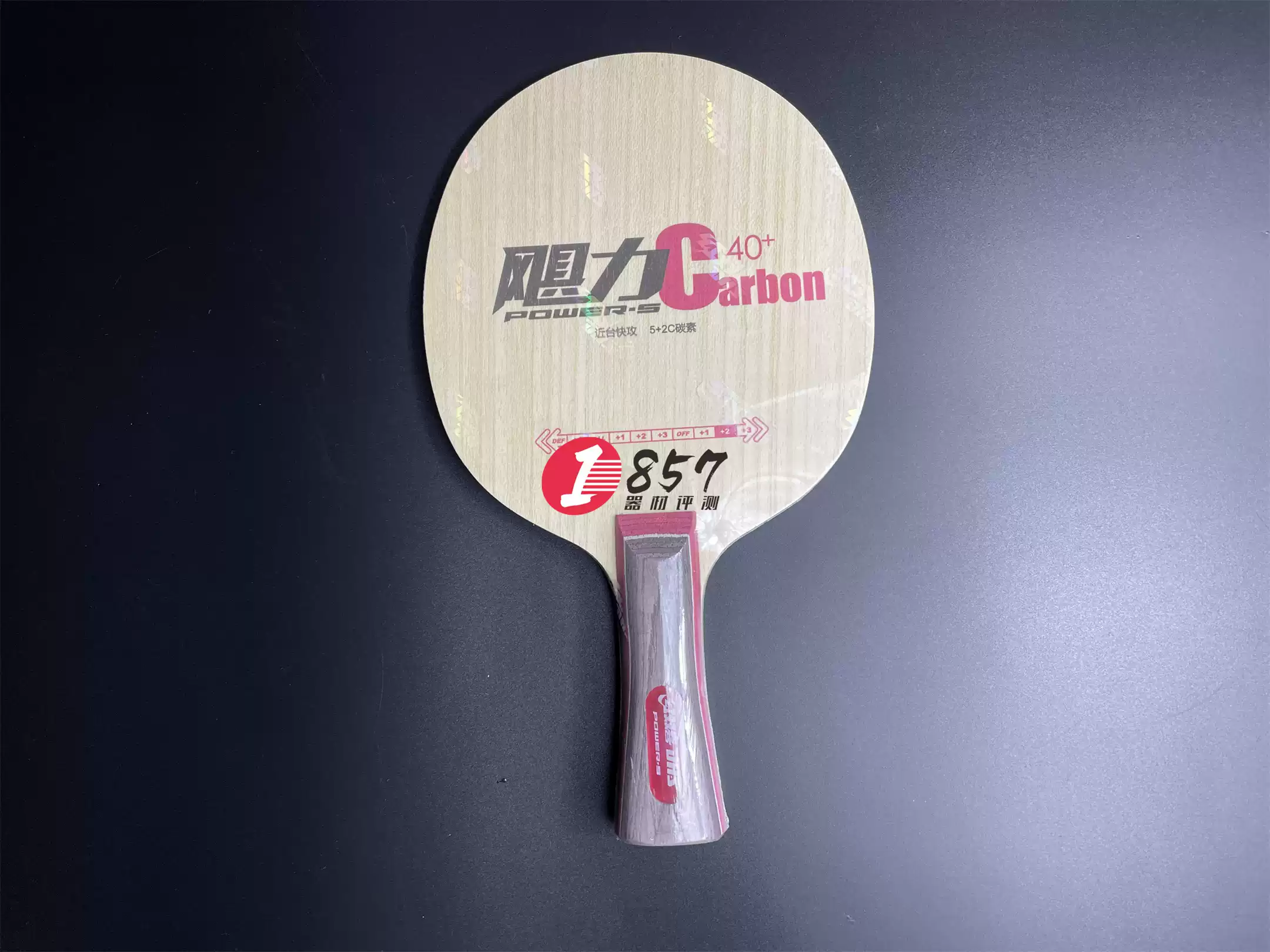
The DHS Power-S is the best value blade discovered in 2022. It has an inner-fiber structure. Unlike the B2X, this inner-fiber blade uses pure carbon, not a carbon and fiber blend.
At low power, it feels more stable than the Fang Bo B2X. Once activated, the quality is even higher. The build quality is also better — the finish is really smooth. This Power S blade is priced under $45. It is a pleasant surprise.
When recommended to others and they tried it, they were shocked when we told the price. They could not believe that a blade at this price point could perform like this. It works well for both beginners and higher-level players. Its overall capability is really strong. The spin feel and attacking power are both excellent.
It is relatively easy to control too. The trajectory stays really nice and consistent — better trajectory than the B2X. It is great for players who like to loop and attack from both wings. The trajectory on this blade is fantastic. You do not even need to add extra brush. Just drive forward, hit into it. It works great for practice and drills too. A real all-rounder. Incredible value.
Downside: The overall weight is on the heavier side. Most of them come in over 90 grams. Not ideal for kids. For adults, it is no problem.
Best for: Players who want an inner-fiber blade with excellent trajectory, spin, and attacking power at a very affordable price. Adults who don’t mind a slightly heavier blade.
Comparison Table
| Blade | Structure | Price Range | Best For |
|---|---|---|---|
| Stiga Clipper Wood | 7-ply all-wood | ~ $60 | Players with some foundation |
| Joola X7 | 7-ply all-wood | ~ $50 | Value seekers who want Clipper-like performance |
| Fang Bo B2X | Inner-fiber (carbon + fiber) | ~ $45 | Loopers who want dwell and control |
| Sanwei Fextra 7 | 7-ply all-wood | Entry-level | Beginners who want speed |
| Yinhe U2 | 7-ply all-wood | Entry-level | Beginners who want softer feel |
| Cornilleau Talisman | 5-ply all-wood | Entry-level | Kids, female players, light blade lovers |
| Sanwei 75 | 5+2 ALC composite | ~ $45 | Intermediate attackers |
| Yinhe Pro 01 | 5+2 ALC composite | ~ $45 | Intermediate spin-loop controllers |
| DHS Power-S | Inner-fiber (pure carbon) | ~ $40 | All-round players who want best value |
How to Choose the Right Entry-Level Blade
There is never a single “best value” piece of equipment. Every blade has its pros and cons. The key is to judge equipment rationally based on its traits and match it to your current level and playing style.
- Absolute beginners: Start with an all-wood blade like the Sanwei Fextra VII, Yinhe U2, or Cornilleau Talisman. These are forgiving, offer good control, and help you develop fundamentals.
- Players with some foundation: The Stiga Clipper Wood, Joola X7, or Fang Bo B2X offer more power and spin potential while remaining controllable.
- Intermediate players ready to upgrade: The Sanwei 75, Yinhe Pro 01, or DHS Power-S provide composite performance without the premium price tag.
- Kids and players with smaller hands: The Cornilleau Talisman’s slim handle and light weight make it an excellent fit.
Only the gear that fits you is truly perfect gear. Take the time to understand what each blade offers, and choose based on your actual needs — not on brand prestige or price alone.
Frequently Asked Questions
What is the best entry-level table tennis blade for a total beginner?
For absolute beginners, an all-wood blade is the best choice. The Sanwei Fextra VII, Yinhe U2, and Cornilleau Talisman are all excellent options. The Fextra VII offers more speed, the U2 provides a softer feel with better ball-holding, and the Talisman is ideal for kids and players who prefer a lighter, slimmer blade.
Is the Stiga Clipper Wood still worth buying in 2026?
Yes. The Clipper Wood has been around for almost 20 years and remains a true classic. Its quality control is excellent, and it offers solid attacking power with stability. It is best suited for players who have moved past the absolute beginner stage and have some basic foundation.
What is the difference between the Joola X7 and the Stiga Clipper Wood?
The Joola X7 has the same structure as the Clipper Wood — it is essentially a copy of that design. The main difference is price: the X7 is typically $15 cheaper. Performance-wise, the X7’s offensive performance is slightly better, and its build quality is arguably a tiny bit better. If brand name matters to you, choose the Clipper Wood. If value matters more, choose the X7.
What is the best value blade under $45?
The DHS Power-S is the best value blade found in 2022. It is an inner-fiber blade with pure carbon, offering excellent trajectory, spin, and attacking power. It works well for both beginners and higher-level players. The only downside is that it is on the heavier side (most over 90 grams), so it is not ideal for kids.
Should I choose the Sanwei 75 or the Yinhe Pro 01?
It depends on your playing style. The Sanwei 75 leans more toward attack and speed, with sharper offensive power and more pace. The Yinhe Pro 01 excels in ball-holding and control, making it better for players who want to focus on controlled spin loops. If you want to attack, pick the Sanwei 75. If you want steady spin loops, pick the Pro 01.
Is the DHS Fang Bo B2X good for beginners?
The B2X is an inner-fiber blade with good dwell time, making it excellent for practicing looping with spin. It is not a fast blade, so it is more about stability and control. It is relatively easy to activate and attack with. However, the craftsmanship is a bit rough — there have been reports of splinters on the edge. It is best suited for players with some foundation who want to develop their spin loop.
Final Takeaway
There is no single “best value” blade for everyone. Every piece of equipment has its strengths and weaknesses. The key is to judge equipment rationally based on its traits and match it to your current level and playing style. Only the gear that fits you is truly perfect gear.
We hope this ranking helps you quickly and easily find the right weapon for your game. If you found this helpful, please subscribe and share — your share might help more players out there.
What is your favorite value blade? Drop it in the comments below!